
How to Know When It Is Time to Consider Senior Living
October 8, 2026 | Caregiver Support
Maybe you have started noticing small changes.
Like your mom doesn’t get out quite as often as she used to. Or your dad has mentioned that keeping up with the house takes more energy these days. Perhaps meals have become simpler, driving feels less comfortable, or routines that once came easily now require a little more thought or assistance.
None of these things automatically mean that it is time for senior living. But they may leave you wondering: Does my loved one need more support? How do we know when it is time to consider assisted living or another senior living option?
For many families, there isn’t one clear moment when the answer becomes obvious. More often, the conversation emerges gradually as circumstances, routines and preferences change.
Instead of looking for a single sign that tells you what to do next, it can be more helpful to step back and look at the bigger picture. What is going well? What has become more difficult? What matters most to your loved one? And could a different kind of support make everyday life easier while supporting their independence?
You don’t need to have all the answers before beginning the conversation.
When Is It Time to Consider Assisted Living?
There is no universal timeline for considering assisted living or other senior living options.
One person may appreciate additional help with a few everyday tasks while someone else may be doing well at home with support from family, friends or outside services. Another person may simply be interested in a lifestyle with fewer household responsibilities and more opportunities for connection.
That is why deciding when to consider senior living is less about reaching a particular age or checking enough boxes on a list and more about understanding your loved one’s life as a whole.
If your family is beginning to have this conversation, it may help to consider a few questions:
- Is what you’re noticing new, or has it been part of your loved one’s routine for a long time?
- Is it an occasional change, or are you noticing a pattern over time?
- How does your loved one feel about what has changed?
- Could additional support make something easier while preserving more time and energy for what they enjoy?
These questions can shift the conversation from “Is it time?” toward something more individualized: “What would help my loved one continue living in a way that feels right for them?”
Look at Patterns, Not One Moment
When you care about someone, an unexpected change can naturally get your attention. But one forgotten appointment, an unusually quiet week or a night when dinner didn’t get made doesn’t necessarily tell you what should happen next.
Patterns can tell you more.
Think about what you and your loved one have noticed over the past several weeks or months. Maybe maintaining the home seems to require more energy than it once did. Perhaps getting around Portland isn’t as convenient as it once was. Maybe your loved one isn’t participating in activities they used to enjoy, or certain parts of their daily routine have become frustrating.
Rather than treating these observations as a checklist of problems, use them as conversation starters.
You might ask, “I’ve noticed grocery shopping seems like more of a hassle lately. How has it been feeling to you?”
Or, “You haven’t been going to your weekly group as often. Are you still enjoying it, or has getting there become difficult?”
Try to stay open to what you hear. Something you assumed was difficult may not bother your loved one at all, while something you hadn’t considered may matter much more to them. Listening can give you a clearer picture than observation alone.
What Has Become More Difficult at Home?
Home can hold years of memories, familiar routines and a deep sense of comfort. For many older adults, staying at home is important, and needing some additional support doesn’t automatically change that.
If your family is wondering how to know when it is time for senior living, start by looking at everyday life without immediately attaching a solution to what you see.
You might consider areas such as:
- Preparing and enjoying regular meals
- Keeping up with housekeeping, laundry or home maintenance
- Getting to appointments, errands and social activities
- Managing medications and other daily routines
- Getting dressed, bathing or completing other personal care tasks
- Moving comfortably through the home
- Staying connected to friends, family and favorite activities
Then go one step further: Which of these matters most to your loved one’s quality of life right now?
For example, the issue may not be that Dad doesn’t want to cook anymore. He may be perfectly happy with simpler meals. But if he misses eating with other people, the more meaningful conversation may be about connection rather than cooking.
Likewise, Mom may be happy to leave some household responsibilities behind but deeply value tending to the garden, spending time outdoors or having a space that feels like her own.
Understanding the why behind a change can help your family think about support in a much more personal way.
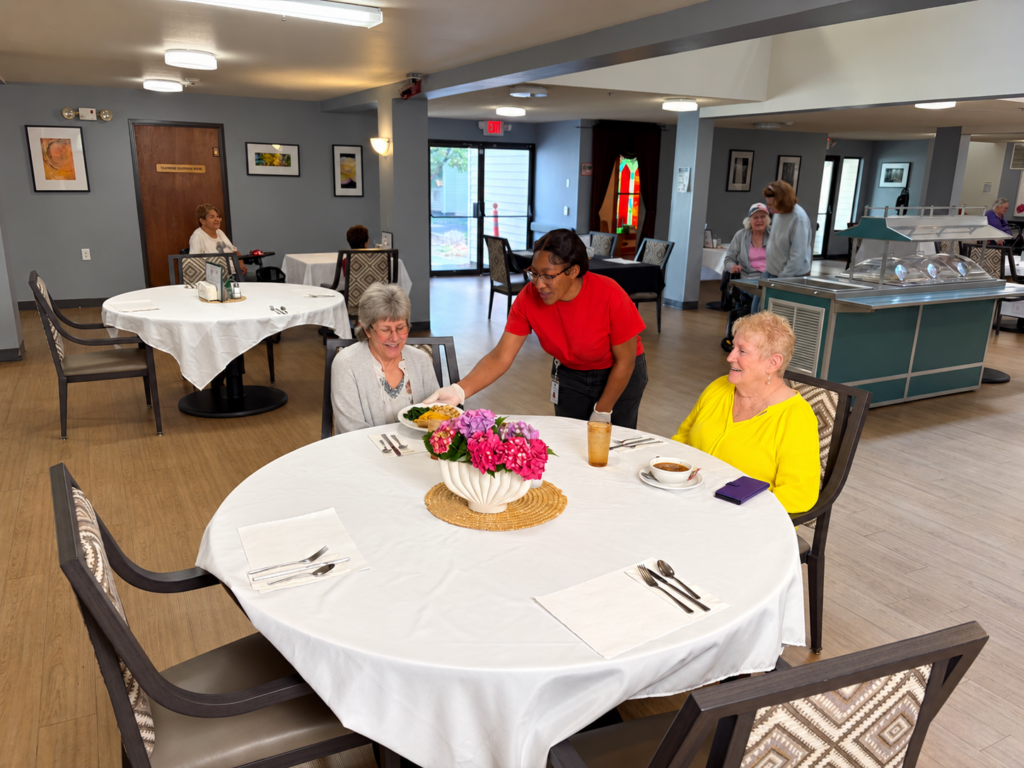
What Does Your Loved One Want From Daily Life?
Conversations about senior living often focus on what someone needs. It is equally important to talk about what they want.
What would your loved one like more of in their day?
Maybe it’s more time with other people, fewer home maintenance responsibilities, easier access to meals and activities, or more opportunities to get outside. It could also be greater peace of mind around certain daily routines or simply more freedom to spend their time and energy on the things they enjoy.
Try questions that leave room for all possibilities:
- What parts of living at home are most important to you?
- Is there anything you wish were easier?
- What would you like to have more time or energy for?
- If you could change one part of your daily routine, what would it be?
- What parts of your routine would you want to keep the same?
These conversations don’t have to begin with, “Do you want to move?”
Starting there can make a complicated conversation feel as though it already has a predetermined outcome. Beginning with what your loved one values can help you explore possibilities together and better understand what kind of support, if any, could complement the life they want.
Is the Current Support Plan Still Working?
Many older adults have support systems that evolve naturally over time, whether that’s a neighbor taking care of the lawn, a daughter providing a ride to an appointment, grocery delivery or someone stopping by to help with a household task.
Support arrangements often change as circumstances change.
The important question is whether the current arrangement continues to work well for your loved one and the life they want to lead.
Take a look at how that support works in everyday life. Your loved one may have reliable help with some things while other parts of their routine have become more difficult. Consider whether the current arrangement can adapt when circumstances change, whether your loved one has opportunities for the social connections and activities they enjoy, and how they feel about the support they currently receive. It may also be helpful to consider whether a different kind of support could make certain parts of everyday life easier.
This is an opportunity to look at the arrangement as it exists today. What worked well a year ago may look different now, just as routines and circumstances naturally change throughout life.
And sometimes, the answer will be that the current plan is working. Exploring the question doesn’t mean you have to change it.
How Can You Explore Senior Living Without Rushing the Decision?
You can begin learning about senior living long before you need to make a decision about it.
Taking time to research, ask questions, talk things through and listen to your loved one’s preferences can help your family better understand the options and feel more informed about the decisions ahead.
Depending on your loved one’s situation and preferences, the possibilities might include adjustments at home, local services, support from family and friends, assisted living, respite care or another type of senior living or support.
If senior living is one of the possibilities you’re considering, you can research communities, ask questions or visit one together. Afterward, talk with your loved one about what they liked, what they didn’t and what they might want to be different.
A visit is a chance to learn firsthand what a senior living community feels like and what life looks like on an average day.
As you explore, consider questions that go beyond a list of services and amenities:
- Could my loved one picture themselves here?
- What might an ordinary day look like?
- How much choice would they have over their daily routine?
- Are there opportunities to continue the hobbies, interests and traditions that matter to them?
- How does the community help residents stay connected to the people and places they care about?
- What support is available now, and what options exist if their preferences or needs change?
The goal isn’t to find a community as quickly as possible. It is to better understand the choices available so your loved one and family can make informed decisions together, whenever the time is right.
Exploring Assisted Living at The Creston in Portland, Oregon
If your family is beginning to explore assisted living in Portland, Oregon, understanding what support is available can help you consider what may align with your loved one’s preferences.
At The Creston, assisted living combines personalized support with opportunities for residents to maintain their independence and continue spending time on the things that matter to them. Support can include assistance with everyday routines such as bathing, dressing and grooming, medication management, housekeeping and laundry, and coordination with healthcare providers. Trained staff are available 24 hours a day.
Daily life at The Creston includes more than assistance with everyday routines. Residents can enjoy chef-prepared dining, activities and social gatherings, wellness opportunities, comfortable gathering spaces, and landscaped outdoor areas and patios. The community’s signature programs include EngageLife activities, Flavorful dining, Vitality health and wellness, and Tranquility salon and styling.
The Creston also offers respite care for older adults who may benefit from temporary support. Short-term guests receive personalized assistance and have access to dining, activities and the community’s amenities during their stay. For individuals who need a higher level of medical or rehabilitative support, The Creston’s broader Southeast Portland campus also offers short-term rehabilitation and long-term care.
Learning about these options doesn’t mean your family has decided that a move is next. It can simply be one more way to gather information, ask questions and better understand what is available.
Not sure what kind of support may be right for your loved one? The Creston team is here to answer your questions and help you learn more about the options available.
Talk with Our Team: https://crestonhr.com/contact-us/
The Creston is a senior living community in Southeast Portland, Oregon, offering assisted living, respite care, short-term rehabilitation and long-term care. Assisted living residents have access to personalized support, 24-hour staff, chef-prepared dining, engaging activities and wellness programs, and landscaped outdoor areas and patios. Located on a seven-acre campus, The Creston offers a range of services designed to support older adults through different circumstances and levels of care.
Where to Find Us

Phone
Hours
Open 24 hours